Ravensburger puzzles Fire Department or Firefighter or Fire Department barracks
Puzzles with something about the fire brigade (firefighter, fire station, putting out a fire) are particularly interesting for smaller children and you often see them in smaller numbers of pieces.
About the Fire Department that appears in puzzles
– Fire Department Puzzles: Excitement for Young and Old
Fire brigade puzzles are not only great fun, but also educational. Whether they show a busy fire station or a brave firefighter in action, they capture the excitement children feel about these heroes in uniform.
– Discover the World of the Fire Department
Each puzzle piece takes you to the exciting world of the fire brigade. Children see how firefighters live and work in the fire station, how the fire trucks shine and how the equipment is used.
– Learning about Safety
Through these puzzles, children learn about safety and the importance of firefighters in our society in a fun way. It's a great way to learn early about fire prevention and what to do in an emergency.
– Imagination and Role Play
While puzzling, children can imagine themselves as the heroic firefighter who saves people. It encourages role play and creative thinking, essential for their development.
– Motor Skills and Problem Solving
Putting together a puzzle helps children develop their fine motor skills. They also learn to think logically as they figure out where each piece belongs.
– Collaboration and Teamwork
Puzzles are a great way to work together. Just like a real fire team, building a puzzle can be a group activity that requires everyone to work together to achieve the goal.
A time-lapse of a Ravensburger Fire Department puzzle (1500 pieces)
NB – there are certainly puzzles for adults on this subject too! 1500 pieces is a bit too much for many children 🙂
Overview of all Ravensburger Fire Department or Firefighter puzzles
| Image | Number of pieces | Box No. | Name Dutch | Name English | years | draftsman | |
|---|---|---|---|---|---|---|---|
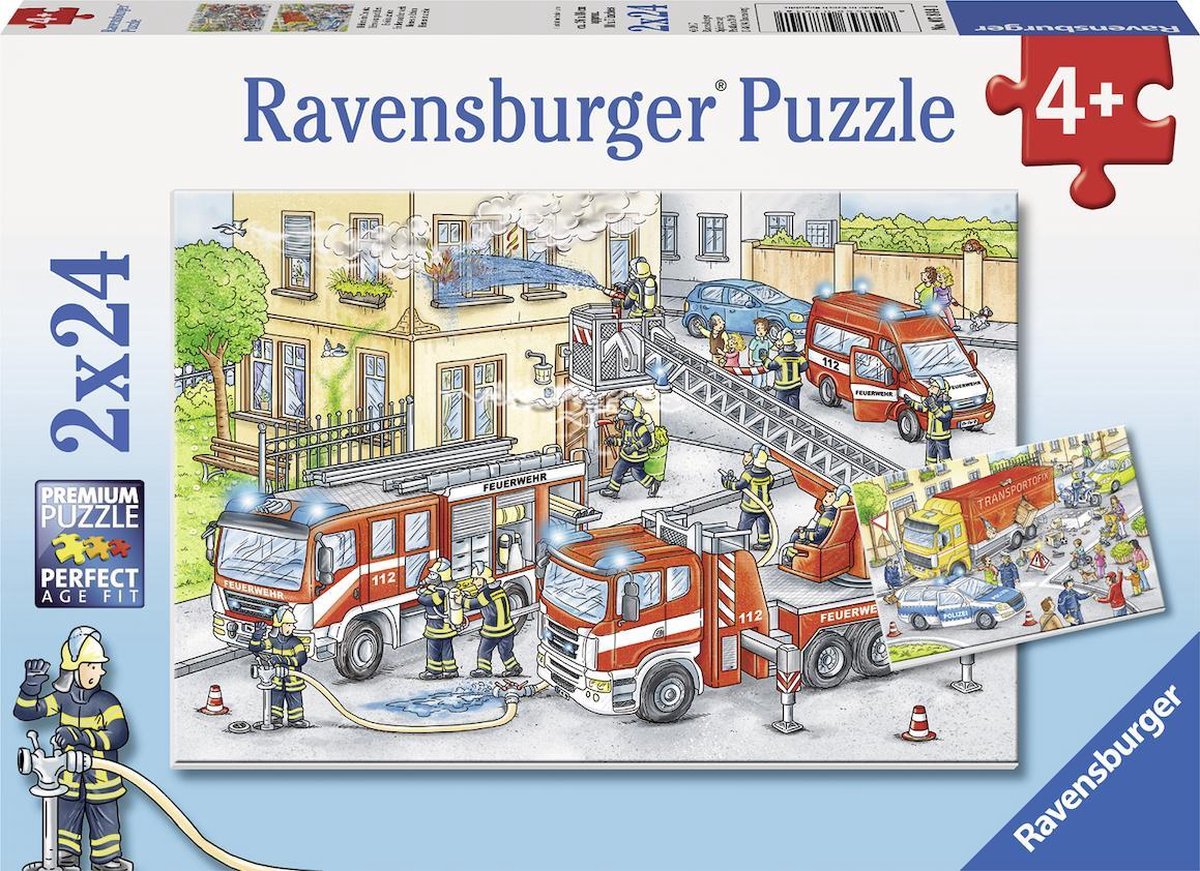 | 2-in-1 / 2x24 | 78141 | Heroes at work | Heroes at work | |||
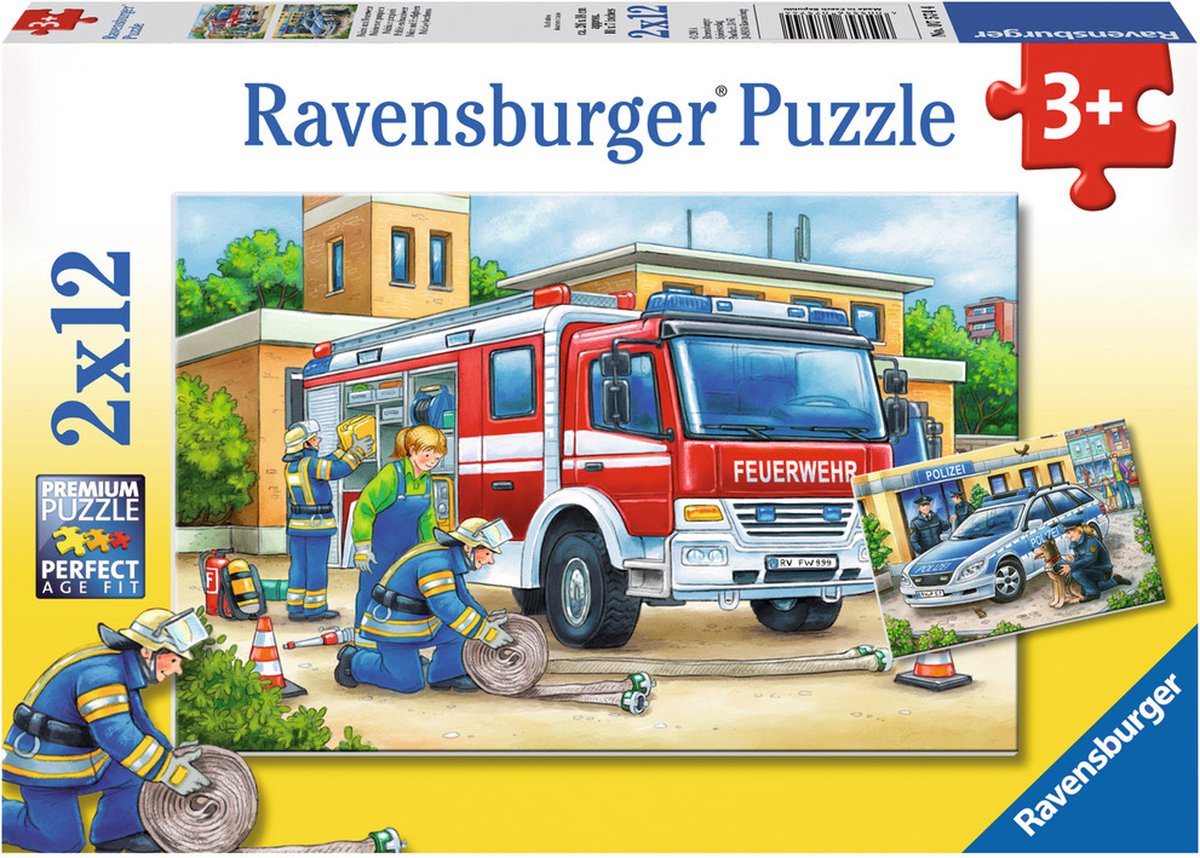 | 2-in-1 / 2x12 | 4005556075744 | Police and Fire Department | Police and Fire Department | |||
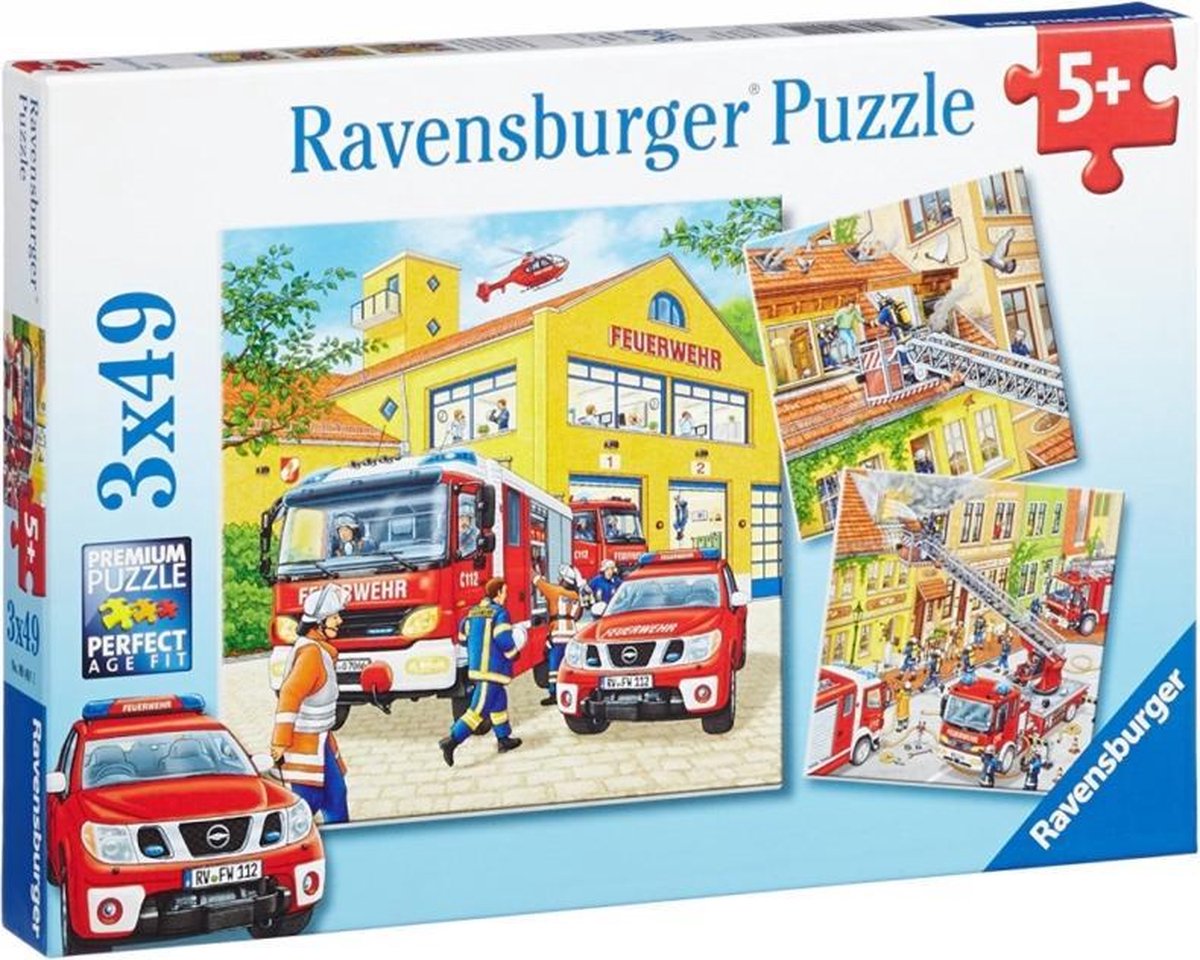 | 3 x 49 | 94011 | Fire Department or Fire Station | Fire Department or Fire Station | |||
 | 12 | 56132 | The fire brigade comes to help | The fire brigade comes to help |
Which puzzles for which ages?
If you have any doubts about a puzzle and the age of a child, you will find an overview in the table below (possibly more explanation on the 'what age how many pieces'):
| Age | Puzzle How many pieces | Order via Bol.com | Order via Amazon.nl | |
|---|---|---|---|---|
| 1 Year - Puzzles | Max 5-10 | Via bol.com | Via Amazon.nl | |
| 2 Year - Puzzles | Max 10-16 | Via bol.com | Via Amazon.nl | |
| 3 Year - Puzzles | Max 16-24 | Via bol.com | Via Amazon.nl | |
| 4 Years - Puzzles (Group 1) | Max 24-50 | Via bol.com | Via Amazon.nl | |
| 5 Years - Puzzles (Group 1+2) | Max 50-100 | Via bol.com | Via Amazon.nl | |
| 6 Years - Puzzles (Group 2+3) | Max 100-250 | Via bol.com | Via Amazon.nl | |
| 7 Years - Puzzles (Group 3+4) | Max 250-500 | Via bol.com | Via Amazon.nl | |
| 8 Years - Puzzles (Group 4+5) | Max 250-500 | Via bol.com | Via Amazon.nl | |
| 9 Years - Puzzles (Group 5+6) | Max 250-500 | Via bol.com | Via Amazon.nl | |
| 10 Years - Puzzles (Group 6+7) | Max 500-1000 | Via bol.com | Via Amazon.nl | |
| 11 Years - Puzzles (Group 7+8) | Max 500-1000 | Via bol.com | Via Amazon.nl | |
| 12 Years - Puzzles (Group 8) | Max 500-1000 | Via bol.com | Via Amazon.nl | |
| 12 years and older | More than 1000 | Via bol.com | Via Amazon.nl |